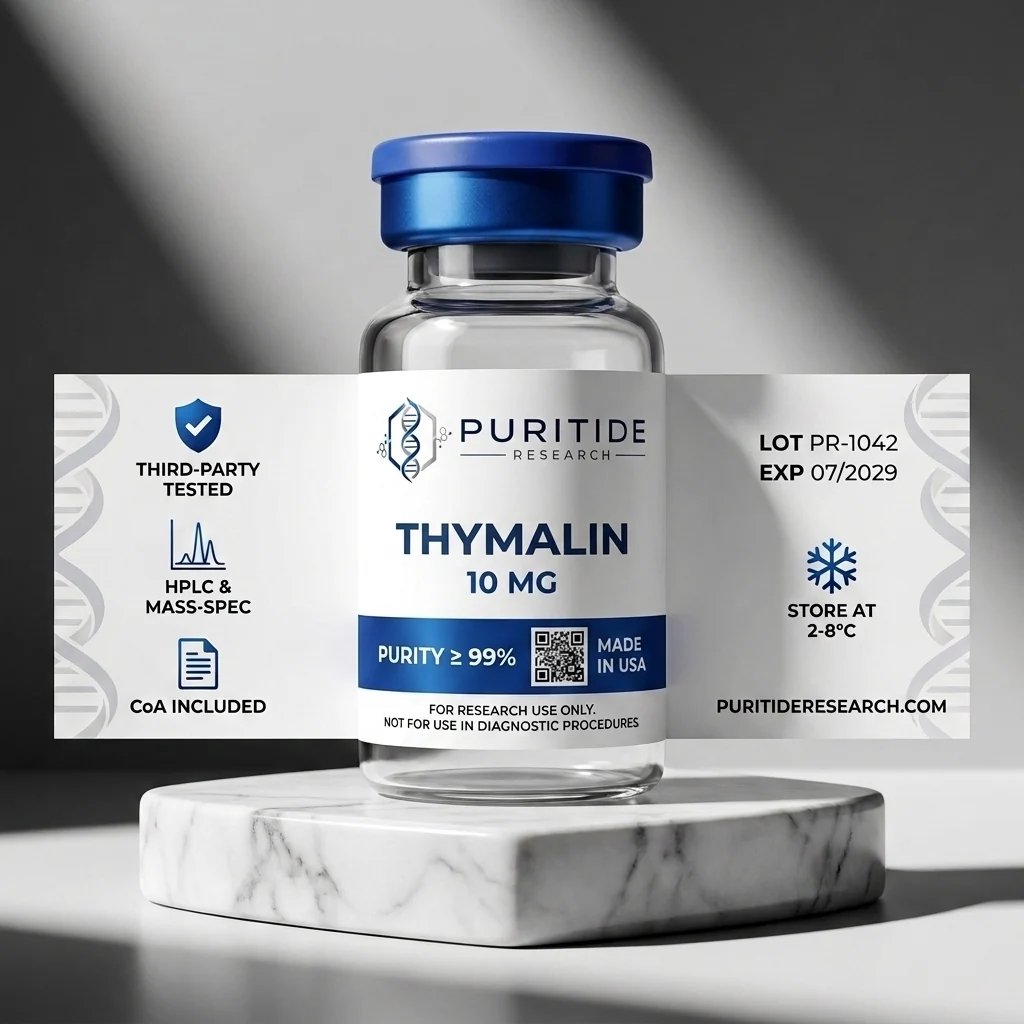
Thymalin is a standardized polypeptide complex extracted from thymic tissue rather than a single defined peptide. Developed within the Soviet and Russian peptide-bioregulator tradition, it is studied as a thymic immune bioregulator. For research groups investigating thymic peptide fractions and T-lymphocyte differentiation, it offers a historically significant tool. Puritide Research supplies Thymalin as a high-purity, research-use-only material, prepared for in vitro and animal-model work and backed by third-party-verified certificates of analysis so your data rests on consistent, documented quality.
Product Specifications
- Application
- Thymic peptide fraction and immune-differentiation research
- Appearance
- Solid, white lyophilized powder in a sealed glass vial
- Synonyms
- Thymalin, Thymarin, thymus polypeptide fraction, thymic bioregulator
- Storage
- Store at ≤25°C, sealed, away from heat, light, and moisture. For extended storage, keep lyophilized and refrigerated or frozen.
Some analytical parameters have not yet been formally characterized for this research compound.
What Is Thymalin?
Thymalin is a polypeptide complex extracted from calf thymus glands, originally developed in the 1970s by Vladimir Khavinson and Vyacheslav Morozov in Saint Petersburg. Unlike precisely defined thymic peptides such as thymosin alpha-1, thymulin, and thymopentin, each with a specific amino acid sequence, Thymalin is a standardized extract containing multiple bioactive polypeptides, generally described in the approximately 1,000 to 10,000 dalton range. Because it is a fraction rather than a single molecule, a single molecular formula and CAS number are not established.
In laboratory settings, Thymalin is studied as a thymic immune bioregulator, with reported activity attributed to its component short peptides. Its originators described it as promoting the differentiation of T-lymphocyte precursors, making it a tool for investigating thymic peptide biology in controlled models.
Present understanding derives from in vitro assays and animal models, much of it published in the Russian-language literature. Findings should be interpreted within their experimental context and not treated as established outcomes for any use supplied by Puritide Research. Thymalin is supplied strictly for laboratory use and is not approved for human or veterinary application.
 Research Use Only