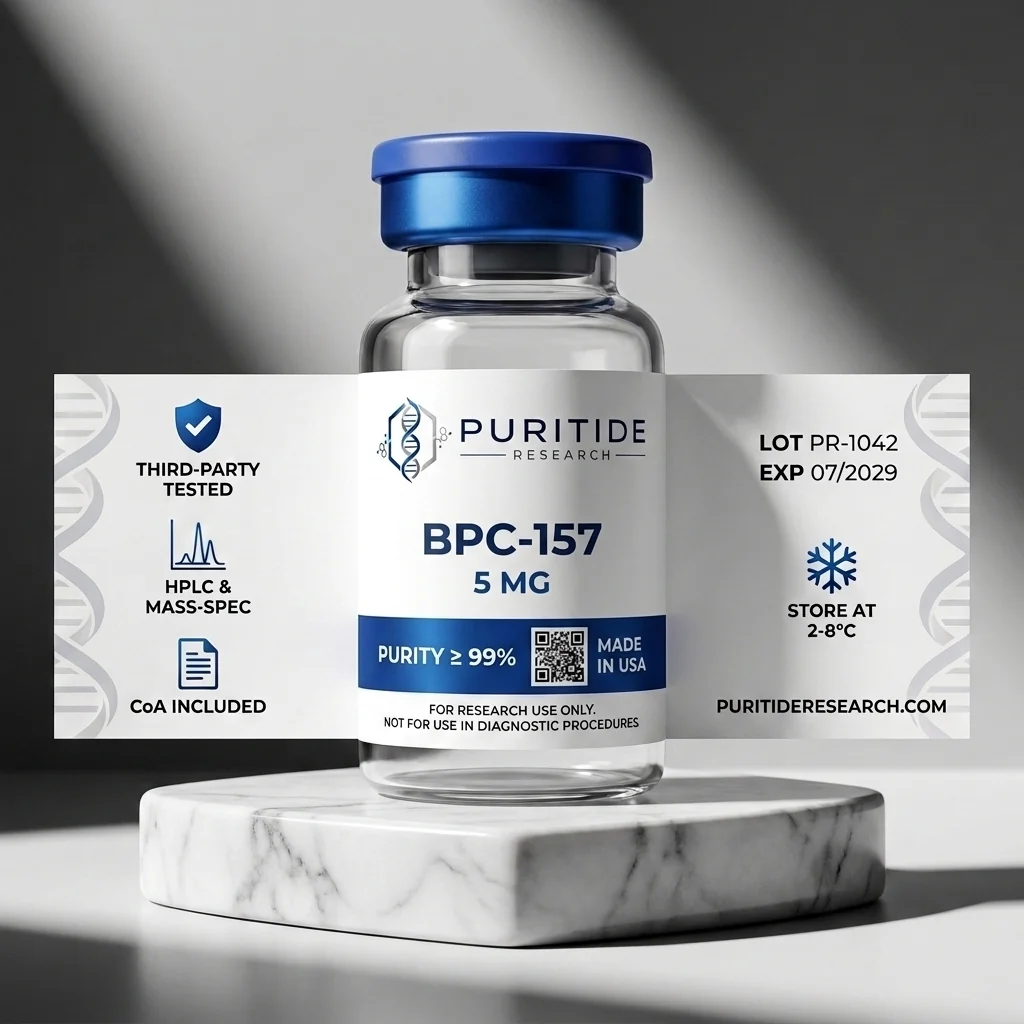
BPC-157 is a synthetic stable pentadecapeptide derived from a sequence in a gastric protective protein, studied extensively in tissue-repair and cytoprotection research models. For teams investigating tendon, muscle, and gastrointestinal healing, angiogenesis, and fibroblast behavior, it offers a well-characterized 15-amino-acid peptide with a large body of preclinical literature. Puritide Research supplies BPC-157 as a high-purity, research-use-only material, prepared for in vitro and animal-model work and backed by third-party-verified certificates of analysis so your data rests on consistent, documented quality.
Available Sizes
- ›BPC-157 5 mg Vial
- ›BPC-157 10 mg Vial
- ›BPC-157 20 mg Vial
Product Specifications
- Application
- Tissue-repair, cytoprotection, and angiogenesis research
- Appearance
- Solid, white lyophilized powder in a sealed glass vial
- Chemical Formula
- C62H98N16O22 (free acid)
- PubChem SID
- 9941957
- CAS Number
- 137525-51-0 (free acid); 216441-37-1 (acetate salt)
- Molecular Weight
- ~1419.5 g/mol (free acid); ~1479.6 g/mol (acetate salt)
- Synonyms
- BPC-157, BPC 157, Body Protection Compound 157, Bepecin, PL 14736, gastric pentadecapeptide BPC 157
- Storage
- Store at ≤25°C, sealed, away from heat, light, and moisture. For extended storage, keep lyophilized and refrigerated or frozen.
What Is BPC-157?
BPC-157 (Body Protection Compound 157) is a synthetic pentadecapeptide, a chain of 15 amino acids (GEPPPGKPADDAGLV), corresponding to a partial sequence identified in a protein found in gastric juice. It is noted in the literature for stability under a range of conditions, which is a defining feature relative to many other peptides.
In experimental settings, BPC-157 is used to study tissue repair, cytoprotection, and angiogenesis across a variety of tissue types, including tendon, ligament, muscle, and the gastrointestinal tract. Its stability and broad activity in model systems make it a widely used probe in healing and protection research.
Present understanding derives largely from cell-culture assays and rodent models. Findings should be interpreted within their experimental context and not treated as established clinical outcomes. Puritide Research supplies BPC-157 strictly for laboratory use; it is not approved for human or veterinary application.
Puritide Research supplies BPC-157 strictly for laboratory research use. Not for human or veterinary use.
 Research Use Only